
Censorship in the Arts: The Bold Voices Defying Global Restrictions
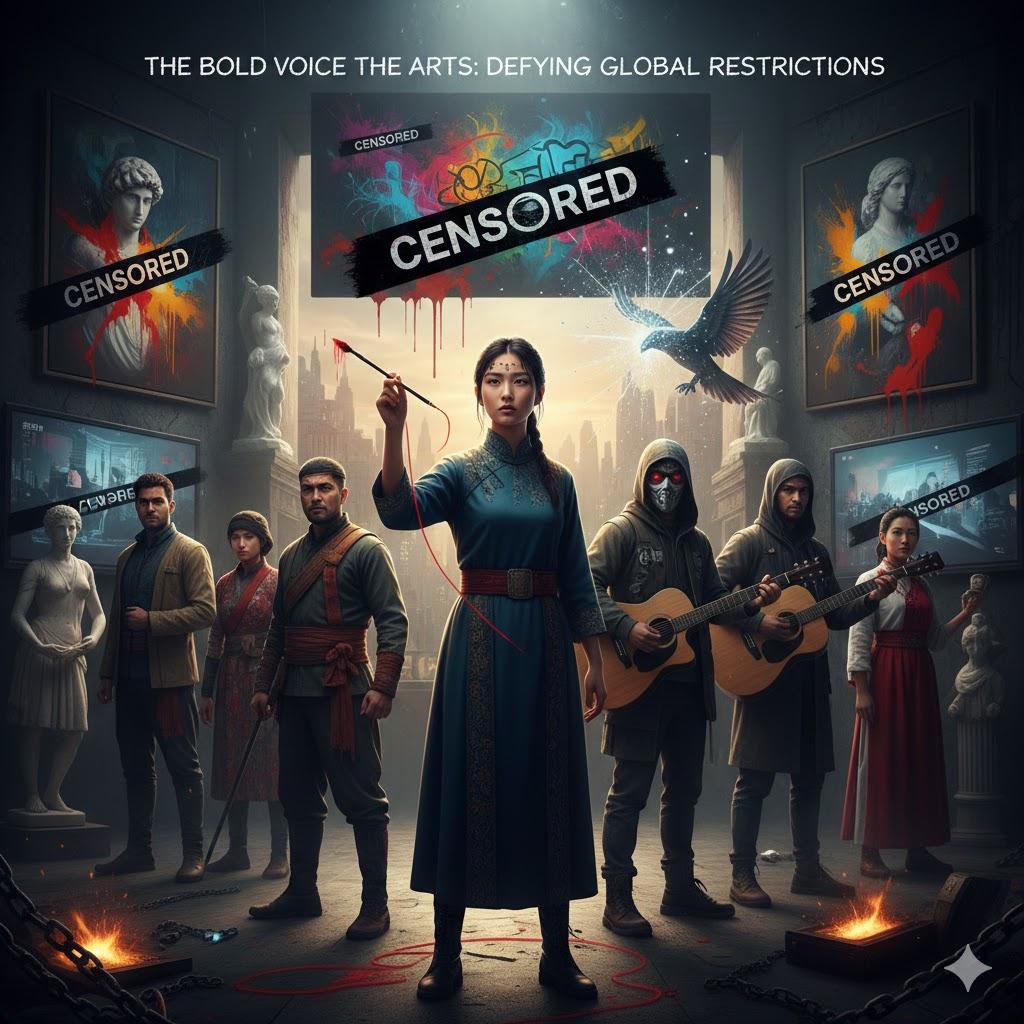
Censorship in the arts is a global phenomenon, a shadow cast across creative expression that seeks to silence voices, control narratives, and restrict the free flow of ideas. From ancient times to the digital age, artists have continually pushed boundaries, challenging societal norms and oppressive regimes, only to face resistance in various forms. This blog post delves into the complex world of artistic censorship, exploring its motivations, its impact, and the indomitable spirit of artists who defiantly continue to create and inspire despite global restrictions.
The Motivations Behind the Muzzle
Why do governments, religious institutions, and even public opinion seek to censor art? The motivations are multifaceted. Often, it stems from a fear of change or a desire to maintain the status quo. Art, by its very nature, can be subversive, questioning authority and prompting critical thought. When art challenges deeply held beliefs, political ideologies, or social hierarchies, it can be perceived as a threat. Religious blasphemy, political dissent, obscenity, and "moral corruption" are frequently cited reasons for suppression. In some cases, economic interests or nationalistic agendas also play a role, with art being censored to protect specific industries or promote a particular national image. The impact on freedom of expression can be devastating, stifling creativity and limiting public discourse.
A Global Tapestry of Suppression
Censorship is not confined to any single region or political system. We see its manifestations across the globe, from highly authoritarian states to seemingly democratic societies.
In countries with strict regimes, direct government intervention is common. Artists might face imprisonment, exile, or the outright banning of their works. Think of the Soviet era, where socialist realism was enforced, and any deviation was met with severe penalties. Or consider contemporary examples where political satire or commentary on human rights abuses can lead to harsh repercussions. These restrictions often extend to digital platforms, with online content being heavily monitored and blocked.
Even in more open societies, censorship can take subtler forms. Funding cuts to arts organizations, public outcry leading to exhibition closures, or self-censorship by artists fearing backlash are all examples of how creative freedom can be curtailed. The "culture wars" in various Western countries often involve debates around artistic content, with accusations of indecency or promoting harmful ideologies. The power of public opinion, amplified by social media, can exert immense pressure on artists and institutions.
The Unbreakable Spirit: Artists as Agents of Change
Despite the omnipresent threat of censorship, artists worldwide continue to be bold voices defying global restrictions. They find innovative ways to circumvent limitations, using allegory, symbolism, performance art, and digital platforms to convey their messages.
Consider the street artists whose ephemeral works challenge authority in public spaces, knowing their creations might be removed within hours. Or the musicians who embed subtle political messages in their lyrics, understood by their audiences but overlooked by censors. Playwrights and filmmakers often use historical narratives or fantastical settings to comment on contemporary issues, skillfully navigating around direct confrontation. The internet, despite its vulnerabilities to censorship, also offers new avenues for artists to share their work globally, reaching audiences beyond the reach of local restrictions. This resilience demonstrates the enduring power of art as a tool for social commentary and resistance.
The Enduring Importance of Artistic Freedom
The fight against artistic censorship is a crucial battle for the soul of society. When art is suppressed, we lose more than just individual creative works; we lose diverse perspectives, critical dialogue, and the ability to confront uncomfortable truths. Artistic freedom is intrinsically linked to broader human rights, including freedom of speech and expression.
Supporting artists who face censorship, advocating for policies that protect artistic freedom, and fostering an environment where challenging ideas are welcomed are essential steps. By understanding the motivations behind censorship and recognizing the courage of those who defy it, we can all contribute to a world where art flourishes, sparking conversations, fostering empathy, and ultimately, driving progress. Let us champion these bold voices and ensure that their creative expressions continue to inspire and provoke, free from the shackles of global restrictions.

 English (US)
 Arabic
 French
 Spanish
 Portuguese
 Turkish
 Dutch
Dutch
 Italiano
 Russian
 Romaian
 Portuguese (Brazil)
 Greek
Greek