
Inside the Virtual Production of 2026’s Biggest Sci-Fi Hits
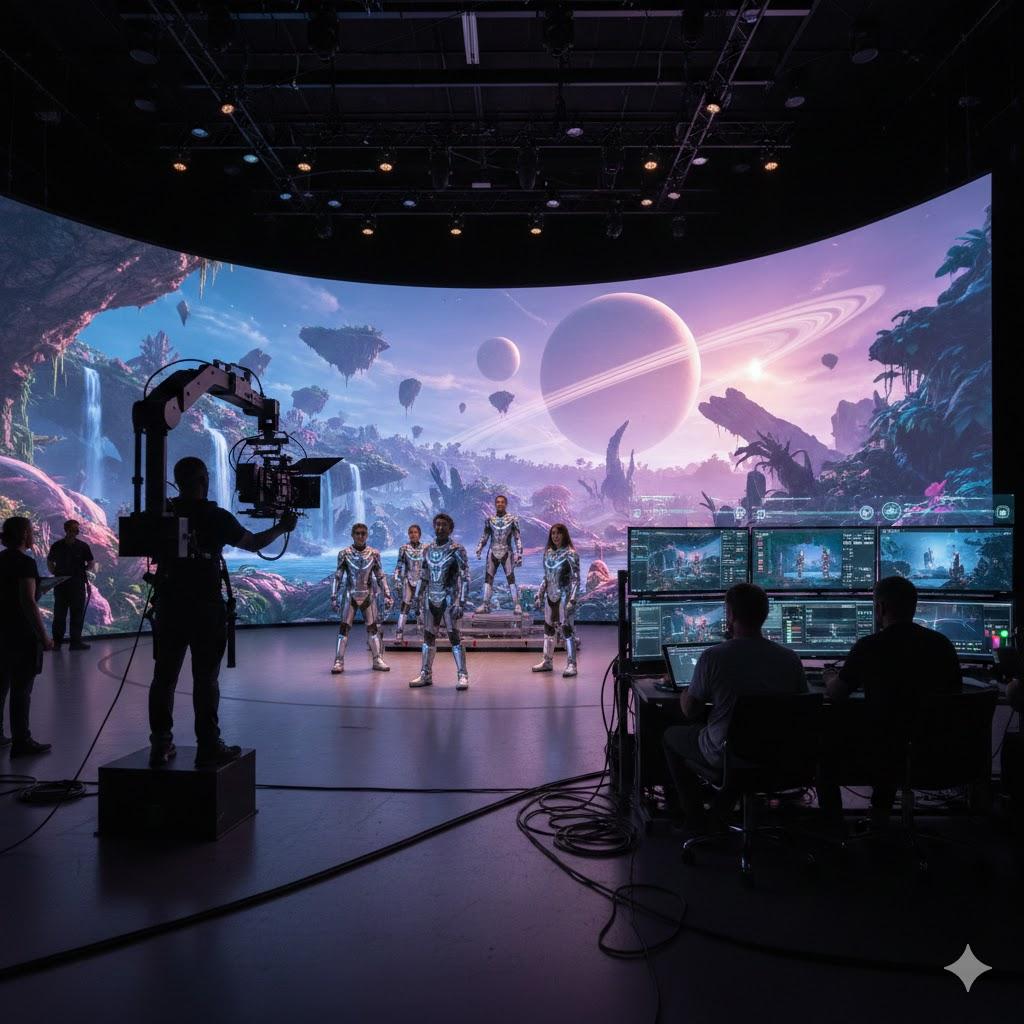
The silver screen has always been a canvas for imagination, but in 2026, that canvas is more virtual than ever before. If you've been awestruck by the breathtaking alien landscapes, intricate futuristic cities, or the seamless blend of digital and practical effects in this year's top sci-fi blockbusters, you've witnessed the magic of virtual production. This revolutionary filmmaking technology is not just changing how movies are made; it's redefining the very limits of storytelling.
What Exactly is Virtual Production?
Imagine a film set where the background isn't a green screen, but a massive LED wall displaying a photorealistic, dynamic environment. Actors perform within this digital world, with the virtual set responding in real-time to camera movements. This is the essence of virtual production. It merges cutting-edge video game engine technology (like Unreal Engine) with traditional filmmaking techniques, allowing directors, cinematographers, and actors to visualize and interact with their digital environments during filming.
Gone are the days of endless post-production surprises. With virtual production studios, filmmakers can make creative decisions on the fly, adjusting lighting, modifying virtual set pieces, or even changing the time of day with a few clicks. This immediate feedback loop saves countless hours and resources, making the creative process more fluid and collaborative.
The Sci-Fi Advantage: Unlocking New Worlds
For sci-fi films, virtual production is a game-changer. Creating believable extraterrestrial planets, advanced spacecraft interiors, or fantastical creatures used to involve complex compositing, often leaving actors to react to empty spaces. Now, they can be fully immersed.
Think about the sprawling galactic empires in "Cosmic Nexus" or the perilous journey through the digital realm in "A.I. Uprising" – films that have dominated the box office this year. These productions heavily leveraged virtual stages, allowing their creators to:
-
Build Immersive Worlds: Design and render entire alien ecosystems or futuristic metropolises in intricate detail, displayed directly on set.
-
Enhance Actor Performance: Actors can see and react to their digital surroundings and fellow digital characters in real-time, leading to more authentic and compelling performances.
-
Achieve Unprecedented Realism: The reflections and interactive lighting from the LED walls naturally illuminate actors and practical props, creating a seamless integration that's incredibly difficult to distinguish from reality.
-
Streamline VFX Workflows: Many visual effects are "baked in" during principal photography, reducing the workload and complexity in post-production.
The Technology Behind the Spectacle
At the heart of these virtual production environments are several key components:
-
High-Resolution LED Walls: These massive screens display the virtual environments with incredible clarity and color accuracy.
-
Real-Time Game Engines: Software like Unreal Engine allows for the creation and rendering of complex 3D environments that can be manipulated instantly.
-
Camera Tracking Systems: Sophisticated sensors precisely track the camera's position and orientation, ensuring the virtual background parallax shifts correctly with every movement, just as it would in the real world.
-
Powerful Computing Rigs: Running all this technology requires immense processing power, often involving arrays of high-end graphics cards.
The Future is Now: What's Next for Virtual Production?
As virtual production technology continues to evolve, we can expect even more sophisticated applications. Miniaturized LED volumes for smaller productions, more accessible software, and even greater integration with AI-driven content generation are on the horizon. The lines between pre-production, production, and post-production will continue to blur, ushering in an era of unprecedented creative freedom for filmmakers.
The blockbusters of 2026 are just a glimpse into a future where imagination is the only true limit on set. So, next time you're captivated by a sci-fi epic, remember the silent star behind the scenes: virtual production, making impossible worlds a tangible reality.

 English (US)
 Arabic
 French
 Spanish
 Portuguese
 Deutsch
 Dutch
Dutch
 Italiano
 Russian
 Romaian
 Portuguese (Brazil)
 Greek
Greek