
Gaming Layoffs Explained: Unpacking the Economic Forces Behind Industry-Wide Job Cuts
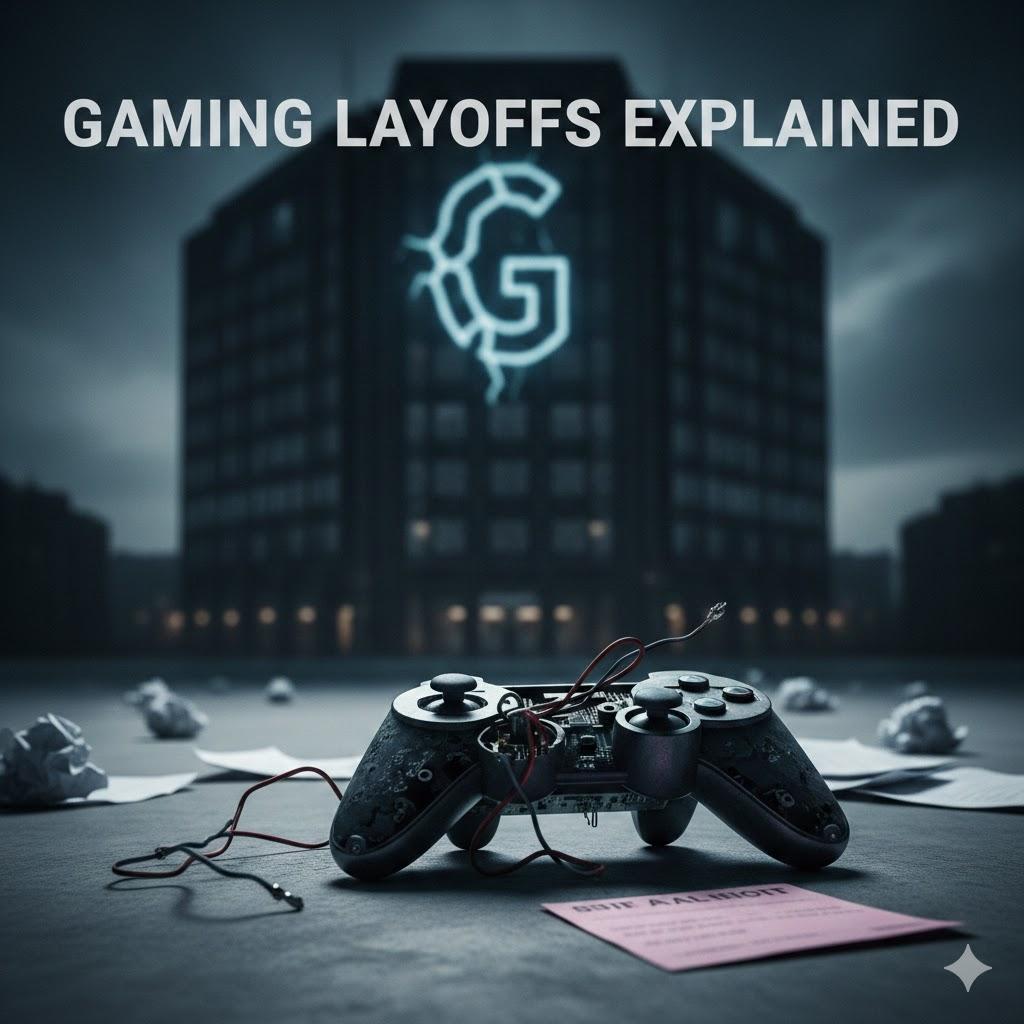
The gaming industry, a vibrant and rapidly evolving sector, has recently been making headlines for a less celebratory reason: widespread job cuts. From indie studios to AAA giants, news of gaming layoffs has become a recurring and concerning theme. If you're wondering why this once-booming industry is experiencing such significant downsizing, you're not alone. This post will delve into the complex economic factors contributing to these job losses, aiming to provide a clear and logical explanation.
The Perfect Storm: A Confluence of Economic Headwinds
Understanding the current wave of gaming industry layoffs requires looking at a combination of interconnected economic forces that have converged in recent years. It's not a single culprit but rather a perfect storm of challenges.
1. Post-Pandemic Correction and Overhiring
The COVID-19 pandemic brought an unprecedented surge in gaming engagement. With lockdowns and increased time at home, more people turned to video games for entertainment and connection. This led to a period of rapid expansion and significant hiring across the industry, as companies anticipated sustained growth.
However, as the world reopened, gaming engagement normalized, and in some cases, even dipped. Many companies found themselves overstaffed for the new reality, leading to a need for workforce adjustments. This post-pandemic correction is a major driver of the recent job cuts in gaming.
2. Rising Interest Rates and Investor Scrutiny
Globally, central banks have been raising interest rates to combat inflation. This makes borrowing money more expensive for companies, impacting everything from expansion plans to operational costs. Investors, in turn, are becoming more risk-averse and demanding higher profitability and efficiency from the companies they back.
For the gaming industry, this translates into increased pressure to cut costs and demonstrate strong financial performance. Companies are being forced to make difficult decisions, and often, that includes reducing headcount to appease investors and maintain financial stability.
3. Market Saturation and Increased Competition
The gaming market is more saturated than ever before. With countless games released annually across various platforms, it's increasingly challenging for new titles to break through and for established franchises to maintain dominance. This intense competition puts immense pressure on development budgets and marketing efforts.
Furthermore, the rise of subscription services and free-to-play models has shifted revenue streams, requiring different strategies for monetization and sustainability. Companies that struggle to adapt to this evolving landscape may face financial difficulties, contributing to gaming layoffs.
4. Development Cost Escalation
Creating modern video games is an incredibly expensive endeavor. The pursuit of photorealistic graphics, complex narratives, and expansive open worlds demands massive budgets for development, technology, and talent. AAA game development costs have soared over the past decade, making it harder to recoup investments, especially for games that don't become runaway successes.
When a highly anticipated game underperforms, or a project faces significant delays, the financial ramifications can be severe, sometimes leading to studio closures or significant staff reductions.
5. Mergers, Acquisitions, and Restructuring
The gaming industry has also seen a wave of mergers and acquisitions. While these can sometimes lead to new opportunities, they often result in redundancies as companies consolidate operations and streamline their workforces. Post-acquisition, there's often a period of restructuring where roles are eliminated to avoid duplication and achieve synergistic efficiencies.
Navigating the Future: What's Next for the Gaming Industry?
The current wave of gaming layoffs is undoubtedly a challenging period for many talented professionals. However, it's also a sign of an industry in transition, adapting to new economic realities and evolving market dynamics.
Moving forward, we can expect a continued focus on efficiency, sustainable growth models, and perhaps a more cautious approach to hiring. While the headlines about job cuts in gaming are concerning, the industry's fundamental creativity and innovation remain strong. As it navigates these economic headwinds, the gaming sector will likely emerge leaner, more strategic, and ultimately, resilient.

 English (US)
 Arabic
 French
 Spanish
 Portuguese
 Deutsch
 Turkish
 Dutch
Dutch
 Italiano
 Romaian
 Portuguese (Brazil)
 Greek
Greek