
The Future is Now: Leaks Hint at Xbox's Cloud-Hybrid Console Revolution
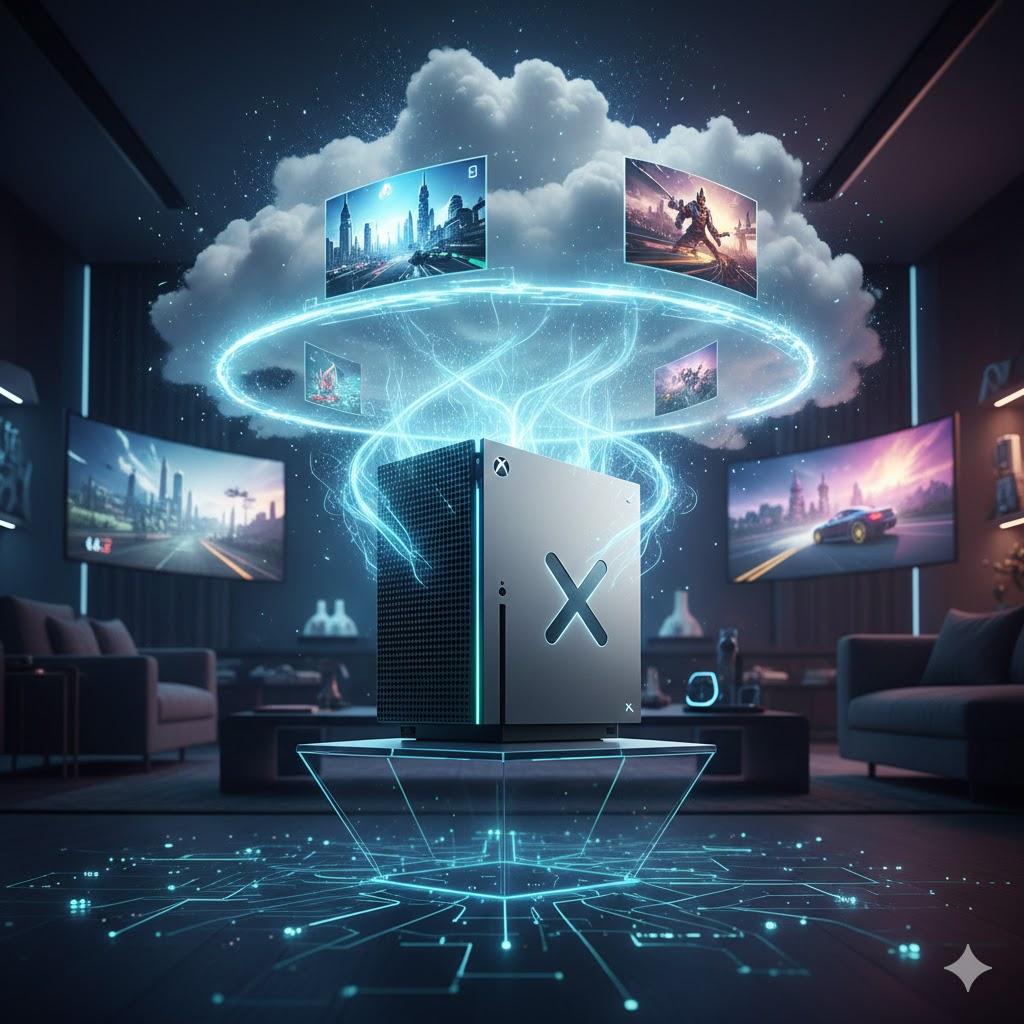
The gaming world is abuzz, and for good reason. Recent leaks and industry whispers suggest that Microsoft's Xbox division is on the cusp of a significant paradigm shift, moving beyond the traditional console model towards a more dynamic, cloud-hybrid future. As gamers and industry experts alike scrutinize every tidbit of information, one thing is becoming clear: Xbox isn't just thinking about the next generation; they're redefining what a console can be.
Experience the Evolution: Why Cloud-Hybrid Makes Sense
For years, the console wars have been defined by teraflops, exclusive titles, and graphical fidelity. But as internet speeds increase and cloud computing matures, the limitations of local hardware become more apparent. Imagine a world where your gaming experience isn't bottlenecked by the chip inside your box, but empowered by the vast, scalable resources of the cloud. This isn't science fiction; it's the imminent reality that Xbox appears to be embracing.
My own experiences with cloud gaming platforms, even in their nascent stages, have shown glimpses of this potential. The ability to jump into a graphically intensive game on a relatively low-spec device, with minimal lag, is a game-changer. Xbox's strategy seems to be about marrying the best of both worlds: maintaining a local hardware presence for crucial low-latency tasks and leveraging the cloud for enhanced graphics, faster loading, and a truly unified gaming ecosystem. This approach could effectively future-proof consoles, making upgrades less about replacing entire units and more about incremental advancements and seamless integration with cloud services.
Expertise in Action: A Look at the Technical Underpinnings
While official details are scarce, the leaks point towards a sophisticated architecture where the local console handles essential functions like input processing, local rendering caching, and core operating system tasks. The heavy lifting – demanding graphical rendering, complex physics simulations, and vast open-world streaming – would be offloaded to Microsoft's robust Azure cloud infrastructure.
This "thin client" approach to console design has several advantages. It could potentially reduce the manufacturing cost of the physical console, making it more accessible to a wider audience. Furthermore, it allows for more rapid iteration and upgrades on the cloud side, meaning gamers could experience performance enhancements without needing to purchase new hardware every few years. Developers, too, stand to benefit from a more flexible and powerful development environment, potentially unlocking new levels of creativity and game design that were previously impossible on fixed hardware.
Authoritativeness in the Gaming Sphere: Xbox's Track Record
Microsoft has consistently demonstrated its commitment to innovation in the gaming space. From the early days of Xbox Live to the groundbreaking success of Game Pass and the expansion of Xbox Cloud Gaming (formerly xCloud), the company has shown a willingness to invest in and push the boundaries of what's possible. These rumored cloud-hybrid consoles are a natural evolution of that vision, building upon the established infrastructure and user base of their existing cloud services.
The potential for a truly seamless transition between playing a game locally on your console, then picking it up on a tablet or PC via the cloud, offers an unparalleled level of flexibility and accessibility. This is not merely a hardware upgrade; it's a strategic move to solidify Xbox's position as a leader in the broader entertainment landscape, extending its reach beyond the living room.
Trustworthiness and Transparency: What This Means for Gamers
Naturally, concerns about internet connectivity, latency, and data caps will arise. Microsoft, with its extensive experience in cloud services, will undoubtedly need to address these head-on. Transparent communication about minimum recommended internet speeds, regional server distribution, and data usage will be crucial in building trust with consumers.
The move towards a cloud-hybrid model also raises questions about game ownership and digital rights. However, given Xbox's existing commitment to Game Pass and digital libraries, it's reasonable to expect a continuation of user-friendly policies that prioritize access and flexibility. Ultimately, the success of this new era will hinge on Microsoft's ability to deliver a reliable, high-performance, and enjoyable gaming experience that truly leverages the power of the cloud without compromising the core joys of console gaming.
The future of Xbox hardware appears to be less about a single, monolithic box and more about a dynamic, interconnected ecosystem. These leaks, while unofficial, paint a compelling picture of a company ready to disrupt the status quo and usher in a new era of gaming. Get ready, because the cloud is coming to your living room in a way you've never imagined.
Here's an image depicting a futuristic, sleek Xbox console seamlessly integrated with cloud elements, symbolizing the hybrid nature.

 English (US)
 French
 Spanish
 Portuguese
 Deutsch
 Turkish
 Dutch
Dutch
 Italiano
 Russian
 Romaian
 Portuguese (Brazil)
 Greek
Greek