
NVIDIA RTX 50 Series Leaks: What Gamers Can Expect from Next-Gen GPU Performance
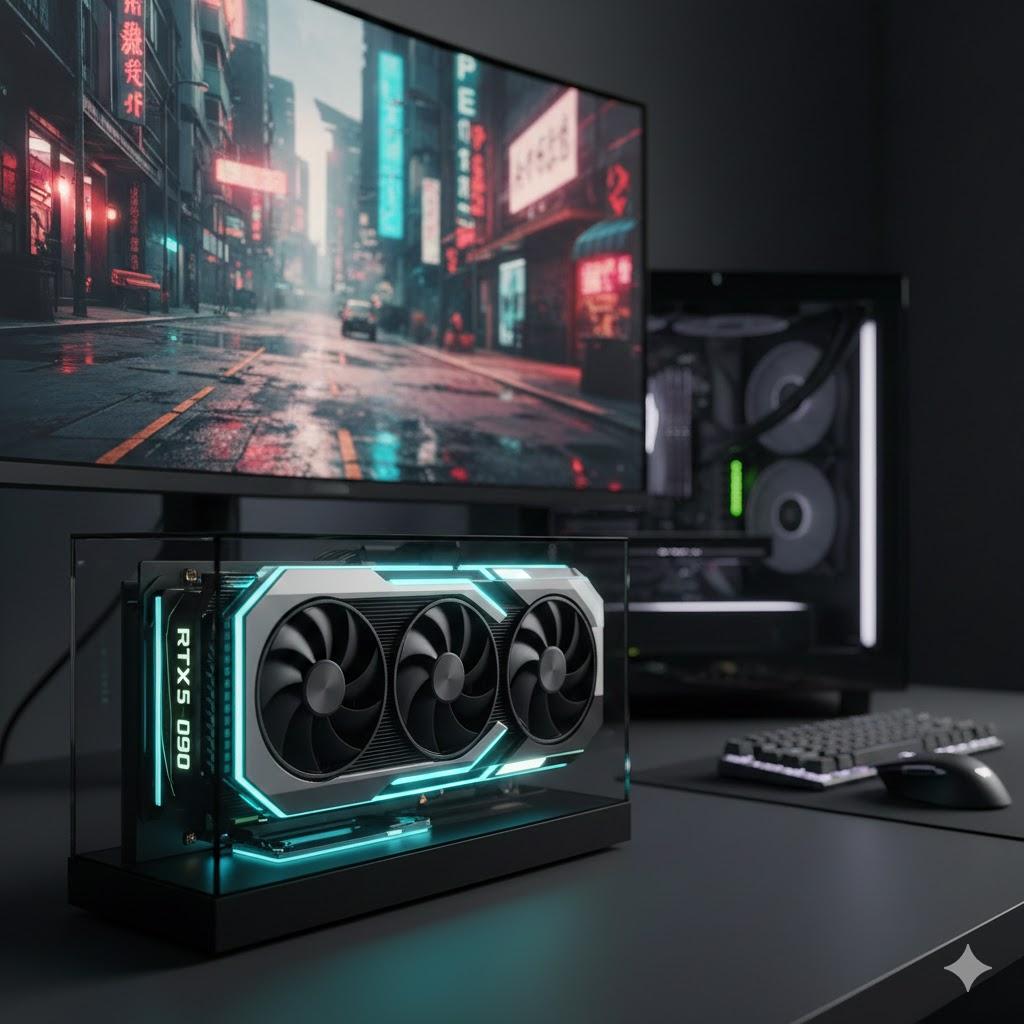
The air is thick with anticipation in the gaming world, and for good reason. Rumors and leaks surrounding NVIDIA's upcoming RTX 50 Series have reached a fever pitch, promising a leap forward in GPU technology that could redefine our gaming experiences. As a long-time enthusiast and someone who's personally upgraded through every RTX generation, I've been poring over every whispered spec and tantalizing tidbit, eager to see how these next-gen GPUs will perform. And let me tell you, if even half of what we're hearing is true, gamers are in for a serious treat.
For years, NVIDIA has been at the forefront of graphics innovation, and the RTX 50 Series, likely based on the "Blackwell" architecture, seems poised to continue this tradition. While official details are still under wraps, the collective buzz from industry insiders points towards significant advancements that go beyond simple clock speed bumps.
Performance: A New Benchmark for Gaming
The most exciting aspect, naturally, is the projected performance increase. We're not just talking about incremental gains; the leaks suggest a substantial jump that could make 4K gaming at high refresh rates the new standard, even with ray tracing enabled. Imagine diving into the most graphically demanding titles with every visual setting cranked to eleven, experiencing buttery-smooth frame rates without compromise. That's the promise of the RTX 50 Series.
One key factor contributing to this expected leap is the potential for a massive increase in core counts. More CUDA cores, Tensor cores, and RT cores will directly translate to higher raw processing power, allowing for more complex scene rendering, faster AI-driven features like DLSS, and more realistic ray-traced environments. My own experience with the RTX 40 Series, specifically my RTX 4080, showed me the power of these architectural improvements, and I'm genuinely excited to see how Blackwell builds upon that foundation.
Memory Bandwidth and VRAM: Future-Proofing Our Rigs
Another critical area where the RTX 50 Series is expected to shine is memory. Modern games are increasingly VRAM-hungry, especially at higher resolutions and with detailed textures. Leaks suggest that the next generation will feature faster GDDR7 memory, offering significantly increased bandwidth. This isn't just a number on a spec sheet; it directly impacts how quickly the GPU can access and process textures and other game assets, leading to smoother gameplay and fewer stutters, particularly in open-world titles.
Furthermore, there's speculation about increased VRAM capacities across the stack. This is excellent news for longevity. As someone who’s seen GPUs become bottlenecked by insufficient VRAM in just a few years, having more memory will be crucial for future-proofing our gaming PCs and ensuring they can handle the increasingly demanding titles on the horizon.
Efficiency and Power Consumption: A Balanced Act?
While raw power is always exciting, efficiency is equally important. NVIDIA has historically aimed for a good balance between performance and power consumption. The shift to a more advanced manufacturing process (likely a TSMC node) for the Blackwell architecture is expected to bring improvements in power efficiency. This could mean more performance per watt, potentially leading to cooler-running cards or allowing for even higher performance within similar power envelopes.
Of course, with great power often comes greater power draw, and we can expect the top-tier RTX 50 series cards to still demand robust power supplies. However, if the efficiency gains are as significant as predicted, we might see more performance without a disproportionate increase in energy consumption, which is a win for both our electricity bills and our cooling solutions.
Ray Tracing and DLSS: Even More Immersive Experiences
NVIDIA has been a pioneer in real-time ray tracing and AI-powered upscaling with DLSS. With the RTX 50 Series, we can anticipate further refinements in both areas. Improved RT cores will allow for even more complex and realistic lighting, reflections, and shadows, pushing the boundaries of visual fidelity. Having spent countless hours admiring the ray-traced reflections in Cyberpunk 2077 and the global illumination in Alan Wake 2, I can't wait to see what the next generation brings to the table.
DLSS, too, is expected to see advancements. Whether it's a new version (DLSS 4?) or significant enhancements to the existing technology, the goal will be to deliver even sharper images with minimal performance overhead, allowing gamers to enjoy stunning visuals without sacrificing frame rates. This is particularly vital for those pushing the limits with 4K gaming.
The Road Ahead: Patience and Anticipation
While the leaks paint a thrilling picture, it's crucial to remember that these are still unofficial details. NVIDIA has a knack for surprising us, and the final products might differ from what the rumor mill suggests. However, the sheer volume and consistency of these leaks provide a strong indication of the direction NVIDIA is heading.
As a gamer who's always excited about the next big leap in technology, the RTX 50 Series represents a truly exciting prospect. From what I've seen and heard, it promises to deliver a generational leap in performance, enhanced memory capabilities, and further refinements to cutting-edge technologies like ray tracing and DLSS. Get ready, gamers – the next era of high-performance PC gaming is almost upon us!

 English (US)
 Arabic
 French
 Spanish
 Portuguese
 Deutsch
 Turkish
 Dutch
Dutch
 Italiano
 Russian
 Portuguese (Brazil)
 Greek
Greek