
How to Master Prompt Engineering: Tips for Better AI Results
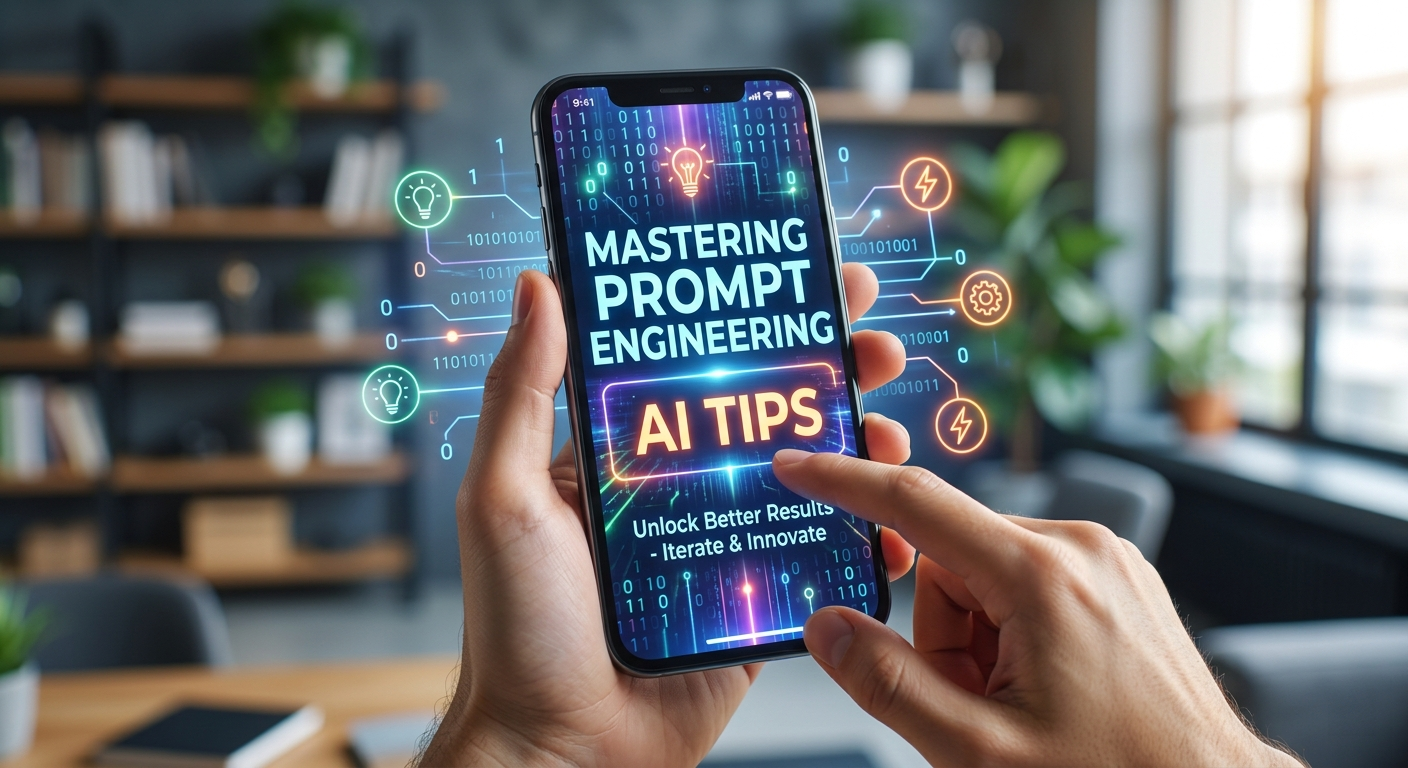
Let's face it: AI is no longer a futuristic novelty; it's a rapidly evolving tool, integrated into our daily workflows. However, many users struggle to unlock its true potential, getting frustratingly average results or entirely inaccurate outputs. The secret lies not in waiting for AI to become smarter, but in mastering the crucial skill of prompt engineering.
Think of prompting like interacting with a highly intelligent, but incredibly literal-minded, genie. If you wish for "money," you might end up with a pile of Monopoly bills. You must be specific, contextual, and strategic. Here’s a breakdown of how to improve your prompts and get the results you actually desire.
Clarity is King
The single most common mistake in prompting is lack of clarity. Avoid ambiguous language. Instead of asking for a "better way to manage projects," ask for "a step-by-step methodology for setting up and running projects using agile principles, including resource allocation and risk mitigation strategies." Be direct and unambiguous. Specify your audience and the desired format for the response (e.g., a formal report, a casual blog post, a numbered list).
Provide Context (And Plenty of It)
Context is the foundation of effective prompting. Generative AI models operate in a vacuum without it. When asking for a marketing slogan, don't just ask for ideas. Give the AI the name of your product, its unique selling proposition, the target audience's demographics, and the desired tone (e.g., professional, playful, authoritative). The more relevant context you provide, the more tailored and effective the AI’s response will be.
Structure for Success
How you structure your prompt can drastically impact the output. Use clear instructions, formatting (like lists and headers), and even examples. If you want the AI to write a specific type of code, provide it with the desired inputs and outputs, as well as an example of the kind of logic you're looking for. A structured prompt makes it easier for the AI to understand the logic and produce the desired result.
Embrace the Iteration Process
The first prompt is almost never the final one. Prompt engineering is inherently iterative. Analyze the initial response. Does it capture the tone? Is the information accurate? Is it formatted correctly? If not, refine your prompt. Use keywords, provide more context, or even try rephrasing your request entirely. Don't be afraid to experiment and guide the AI. Consider this interaction as a collaborative conversation, not a simple query.
Use Specific Constraints and Formats
Constraints can actually foster creativity. Ask the AI to write a summary in under 100 words, or create a list of five key takeaways. Ask it to respond in a specific persona (e.g., "Answer this question like a seasoned data scientist"). Specifying constraints guides the AI and prevents it from rambling.
By following these simple tips and consistently practicing, you can transform your AI interactions from frustrating dead-ends into productive collaborations. Mastering prompt engineering is the ultimate key to unlocking the full potential of these powerful tools and achieving truly superior results. Start treating your prompts as strategic inputs, and watch the quality of your outputs soar.

 English (US)
 Arabic
 French
 Spanish
 Portuguese
 Deutsch
 Turkish
 Dutch
Dutch
 Italiano
 Russian
 Portuguese (Brazil)
 Greek
Greek