
AI-Powered Game Development: A 30% Reduction in Early-Stage Costs
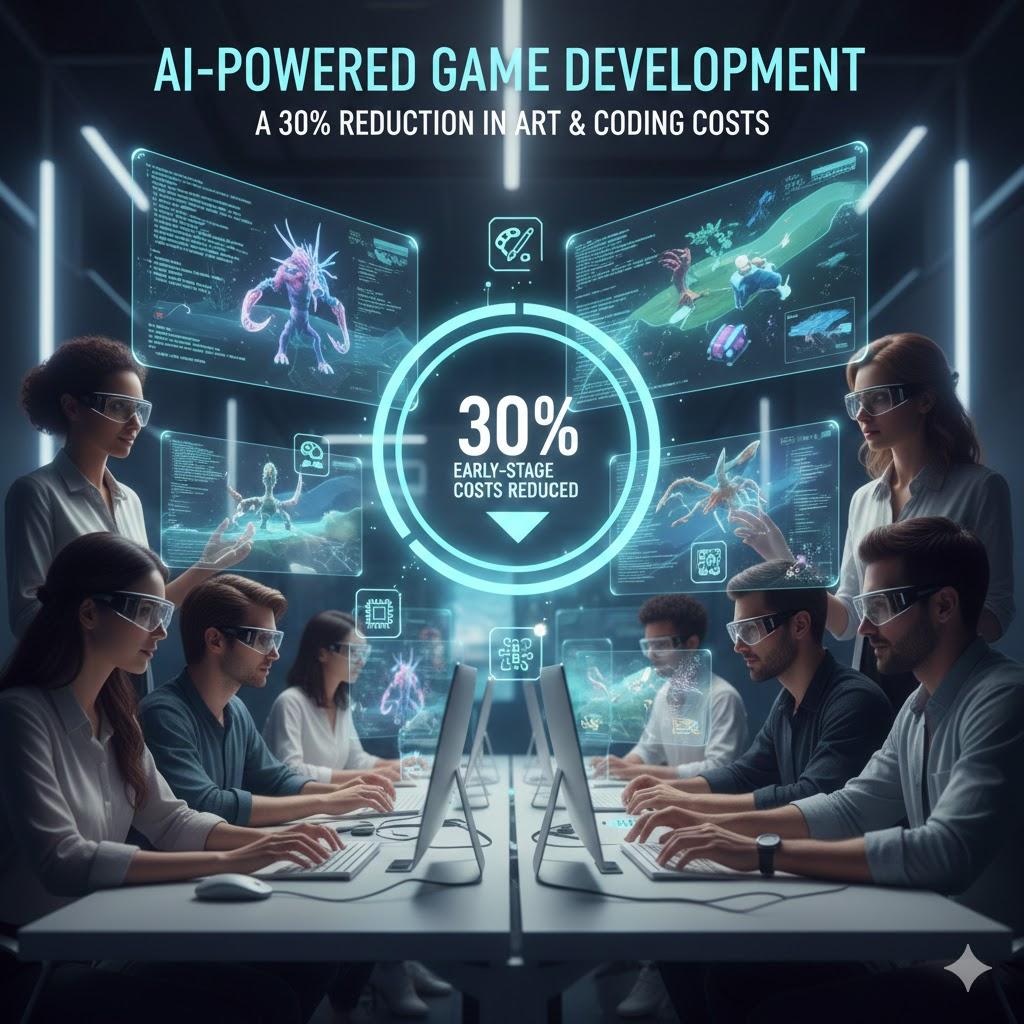
The landscape of game development is constantly evolving, with new technologies emerging to streamline workflows and unlock unprecedented creative potential. Among these, Artificial Intelligence (AI) stands out as a transformative force, fundamentally reshaping how games are conceptualized, designed, and brought to life. A recent survey has shed light on just how significant this impact is, revealing that AI technologies have reduced art and coding costs in the early stages of game development by approximately 30%.
This statistic isn't just a number; it represents a paradigm shift for studios of all sizes, from indie developers to AAA powerhouses. Let's delve into how AI is achieving these remarkable efficiencies and what it means for the future of the industry.
The AI Advantage in Early-Stage Development
Game development is notoriously resource-intensive, especially during the initial phases where concepts are solidified, prototypes are built, and foundational assets are created. This is where AI truly shines, acting as a powerful co-pilot for developers.
1. Accelerated Art Asset Creation: One of the most significant cost savings comes from the realm of art. Traditionally, creating 2D and 3D assets, textures, and environments is a labor-intensive process requiring skilled artists many hours. AI-powered tools are now capable of:
-
Generating realistic textures: AI can analyze existing images and generate new, high-quality textures with variations, saving artists from repetitive work.
-
Automating mesh generation and optimization: AI can quickly create base meshes from sketches or 2D images, and even optimize existing models for performance.
-
Procedural content generation: From sprawling landscapes to intricate cityscapes, AI algorithms can generate vast amounts of unique content with minimal human input, allowing artists to focus on refining specific elements rather than building everything from scratch.
-
Character rigging and animation assistance: AI can automate parts of the rigging process and even assist with generating basic animations, drastically cutting down on animation time.
2. Smarter and Faster Coding: Coding is the backbone of any game, and AI is increasingly assisting programmers in writing cleaner, more efficient, and bug-free code.
-
Code auto-completion and suggestion: Advanced AI models can predict and suggest code snippets, reducing typing time and potential errors.
-
Automated bug detection and fixing: AI tools can analyze codebases to identify potential bugs, vulnerabilities, and inefficiencies, often suggesting fixes before they become major problems.
-
Generating boilerplate code: For common tasks or framework setups, AI can generate standard code structures, freeing developers to focus on unique gameplay mechanics.
-
Optimizing performance: AI can analyze game code during runtime and suggest optimizations to improve frame rates, memory usage, and overall performance.
Beyond Cost Savings: The Broader Impact
While the 30% cost reduction is a compelling reason for adoption, AI's benefits extend far beyond just saving money.
-
Empowering Smaller Teams: Indie developers, often operating with limited budgets and personnel, can leverage AI to punch above their weight, creating more ambitious and polished games with fewer resources.
-
Fostering Innovation: By automating mundane tasks, AI allows artists and programmers to dedicate more time to creative problem-solving, experimentation, and pushing the boundaries of game design.
-
Faster Prototyping: AI accelerates the creation of playable prototypes, enabling studios to test gameplay mechanics and user experiences more rapidly, iterating faster based on feedback.
-
Improved Quality and Consistency: AI can help maintain consistency across large projects, ensuring art assets adhere to style guides and code follows best practices.
The Road Ahead
The integration of AI in game development is still in its early stages, and the potential for further innovation is immense. As AI models become more sophisticated and accessible, we can expect even greater efficiencies, more dynamic content generation, and entirely new forms of interactive experiences.
Studios that embrace AI now are not just cutting costs; they are future-proofing their development pipelines and positioning themselves at the forefront of the next era of gaming. The 30% reduction in early-stage art and coding costs is just the beginning of what promises to be a revolutionary journey.

 English (US)
 Arabic
 French
 Spanish
 Portuguese
 Deutsch
 Turkish
 Dutch
Dutch
 Italiano
 Russian
 Romaian
 Portuguese (Brazil)