
Why Blue-Chip Art is Outperforming the S&P 500 in 2026
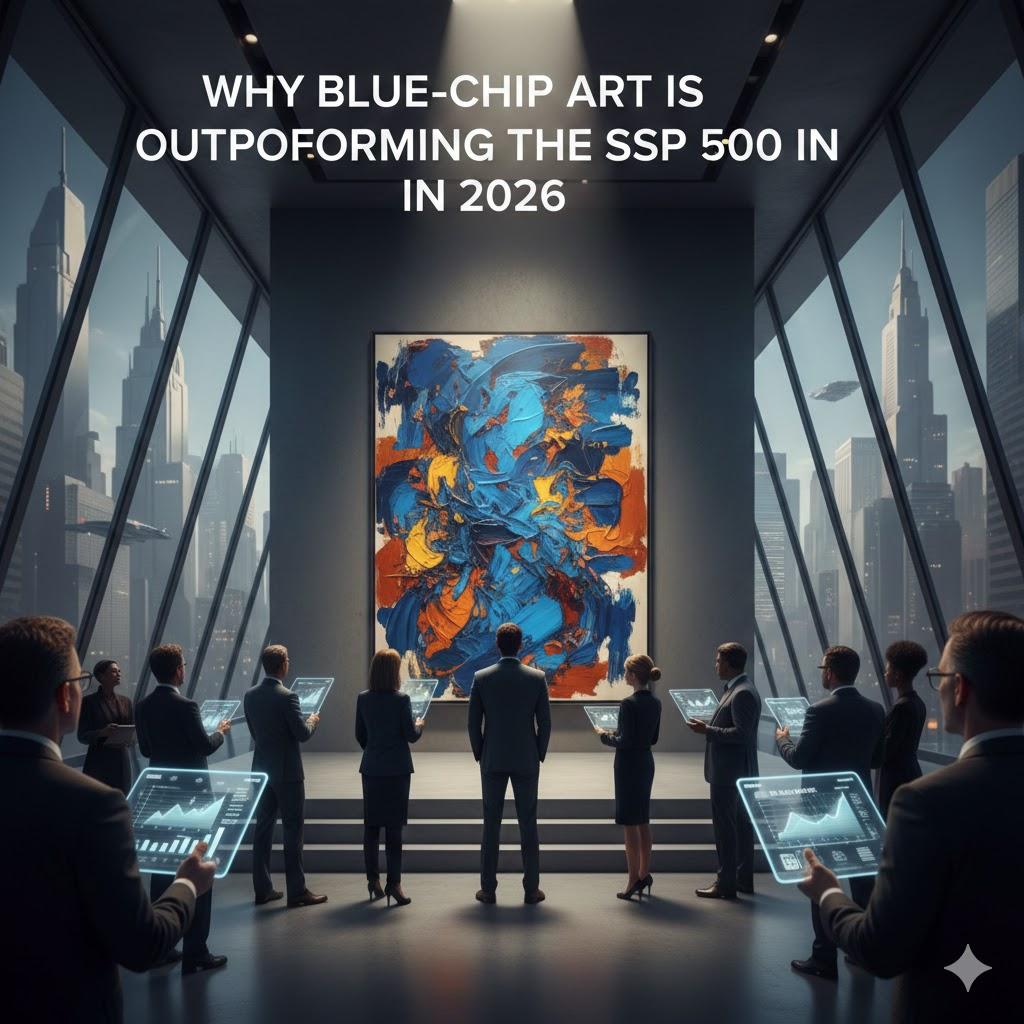
New York, NY – As we navigate through 2026, a compelling narrative is emerging from the world of finance: blue-chip art is not just holding its own, but significantly outperforming the S&P 500. This trend, while surprising to some, reflects a confluence of economic factors, evolving investor sentiment, and the inherent stability of top-tier art as an asset class.
For years, blue-chip art – defined as works by established, historically significant artists with proven market demand – has been viewed as a luxury asset, a passion investment, or a hedge against inflation. However, recent market dynamics suggest a more fundamental shift, positioning it as a serious contender in diversified portfolios.
The Allure of Tangible Assets in Uncertain Times
One of the primary drivers behind this outperformance is the ongoing global economic uncertainty. In an environment marked by fluctuating interest rates, geopolitical tensions, and persistent inflationary pressures, investors are increasingly seeking tangible assets that offer a perceived safe haven. Unlike stocks, which are subject to market sentiment and corporate performance, a Picasso or a Basquiat holds intrinsic value that transcends short-term economic shifts.
"We're seeing a flight to quality," explains Dr. Evelyn Reed, a leading art market economist. "When traditional markets become volatile, investors naturally gravitate towards assets that are perceived as less correlated and more resilient. Blue-chip art, with its finite supply and historical appreciation, fits that bill perfectly."
Scarcity and Uniqueness: The Ultimate Value Proposition
The concept of scarcity plays a crucial role in the art market. There will only ever be a finite number of works by a Rothko or a Warhol. This inherent scarcity, coupled with the unique cultural and historical significance of each piece, creates a powerful value proposition that publicly traded companies simply cannot replicate.
Moreover, the "trophy asset" appeal of blue-chip art continues to attract ultra-high-net-worth individuals and institutions seeking not only financial returns but also the prestige and cultural capital associated with owning masterpieces.
The Rise of Art-Backed Lending and Fractional Ownership
Innovation within the art market is also contributing to its newfound prominence. The expansion of art-backed lending facilities allows collectors to unlock liquidity from their valuable assets without having to sell them, making art a more flexible investment.
Furthermore, the growing trend of fractional ownership, enabled by blockchain technology and specialized platforms, is democratizing access to blue-chip art. This allows a wider pool of investors to own a share of high-value pieces, thereby increasing demand and market depth. "Fractional ownership is a game-changer," says Michael Chen, CEO of ArtShare Collective. "It's opening up the blue-chip market to a new generation of investors who might not have been able to participate before, driving up overall market interest and prices."
Looking Ahead
While the S&P 500 remains a cornerstone of many investment strategies, the remarkable outperformance of blue-chip art in 2026 signals a significant evolution in investment thinking. As investors continue to prioritize diversification, tangible assets, and unique value propositions, the canvas of the art market appears increasingly bright, offering not only aesthetic pleasure but also substantial financial returns.

 Arabic
 French
 Spanish
 Portuguese
 Deutsch
 Turkish
 Dutch
Dutch
 Italiano
 Russian
 Romaian
 Portuguese (Brazil)
 Greek
Greek