
Can an Algorithm Paint a Masterpiece? The Ethics of Generative Art
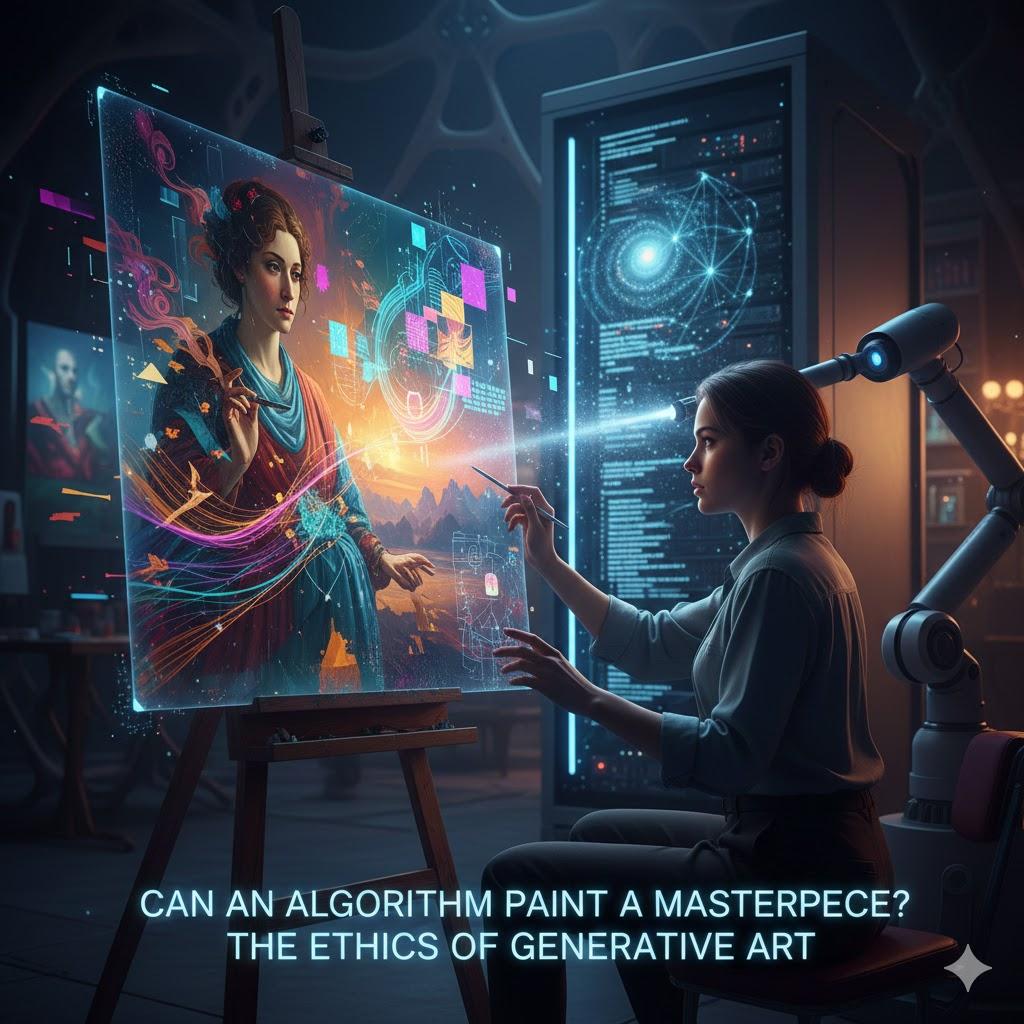
The art world has always been a crucible of innovation, a space where boundaries are pushed and definitions challenged. From photography to performance art, each new medium has sparked debate and redefined our understanding of creativity. Today, we stand at another such precipice, gazing into the fascinating and sometimes perplexing world of generative art.
Generative art, at its core, involves algorithms creating artworks with varying degrees of human input. Think of a programmer writing code that, when run, produces a unique and often stunning visual composition. It's a field exploding with potential, creating breathtaking pieces that can be intricate, abstract, or even eerily realistic.
But as with any revolution, there are profound questions. Can an algorithm truly paint a masterpiece? And what are the ethical implications of a machine-generated aesthetic?
The Creative Spark: Human vs. Machine
For centuries, the "masterpiece" has been intrinsically linked to the human hand, mind, and soul. The brushstrokes of a Rembrandt, the emotional depth of a Kahlo, the societal commentary of a Banksy – these are products of unique human experience, intuition, and conscious decision-making.
Generative art flips this script. The "creator" is a set of instructions, a carefully crafted algorithm. The beauty often lies in the unexpected outputs, the happy accidents that emerge from the code's execution. Does this diminish the "art" of it? Or does it simply shift our understanding of authorship?
One perspective argues that the artist in generative art is the programmer, the one who conceives the algorithm and sets its parameters. They are the architects of possibility, guiding the machine's creative potential. The algorithm, then, becomes a sophisticated tool, an extension of the artist's vision, much like a brush or a chisel.
However, critics often lament the perceived lack of "soul" or "emotion" in AI-generated work. Can an algorithm genuinely feel the joy, sorrow, or anger that often fuels human artistic expression? This is where the debate gets philosophical. While an AI can learn to mimic human emotions in its output, the underlying process is mathematical, not experiential.
The Problem of Authenticity and Originality
In the traditional art world, authenticity is paramount. A forgery, no matter how skillful, is not considered a true masterpiece. With generative art, the concept of "originality" becomes wonderfully complex.
If an algorithm can produce infinite variations of a theme, which one is "the" original? Is it the algorithm itself? Is it the first output? Or every output? This challenges our established notions of scarcity and uniqueness, which often contribute to an artwork's perceived value.
Furthermore, algorithms are often trained on vast datasets of existing human-created art. This raises questions about intellectual property and derivative works. If an AI creates a piece that strongly resembles the style of a living artist, where do the lines of influence and originality blur? Is it plagiarism if the "artist" is a machine without intent?
Ownership, Value, and the Art Market
The implications for the art market are significant. If algorithms can produce high-quality art quickly and efficiently, what happens to the value of human-created pieces? Will we see a future where AI-generated art saturates the market, driving down prices for certain genres?
Then there's the question of ownership. Who owns the copyright to a piece of generative art? The programmer? The owner of the algorithm? The entity that trained the AI? These are legal and ethical quandaries that are still being grappled with.
Consider the burgeoning market for NFTs (Non-Fungible Tokens) in art. Generative art has found a fertile ground here, with unique algorithmic outputs being tokenized and sold. This provides a mechanism for digital scarcity and ownership, but it doesn't fully resolve the underlying ethical questions about authorship and originality in the traditional sense.
The Future of Art: Collaboration, Not Replacement
Ultimately, the rise of generative art isn't about machines replacing human artists. Instead, it offers a powerful new frontier for collaboration and exploration. Artists can leverage algorithms as creative partners, pushing the boundaries of what's possible and experimenting with new forms and aesthetics.
Imagine a future where artists and AI work hand-in-hand, where algorithms are tools for conceptualizing, iterating, and even executing artistic visions. The "masterpiece" of tomorrow might be a testament to the symbiotic relationship between human ingenuity and artificial intelligence.
The ethics of generative art are still being written, and there are no easy answers. But by engaging with these questions, by debating the nature of creativity, authenticity, and ownership, we are not just defining the future of art; we are defining our understanding of what it means to be creative, both as humans and in our interactions with the intelligent machines we create.
What are your thoughts on generative art? Do you believe an algorithm can paint a masterpiece? Share your perspective in the comments below!

 English (US)
 Arabic
 French
 Spanish
 Portuguese
 Deutsch
 Turkish
 Dutch
Dutch
 Italiano
 Russian
 Romaian
 Greek
Greek